😱😱 “No One Told the Horse to Lower Its Body.”
A baby bald eagle stands alone in the rain — and a young Clydesdale shifts its entire posture beside it, changing the tone of the scene without anyone asking.
The moment happens quietly.
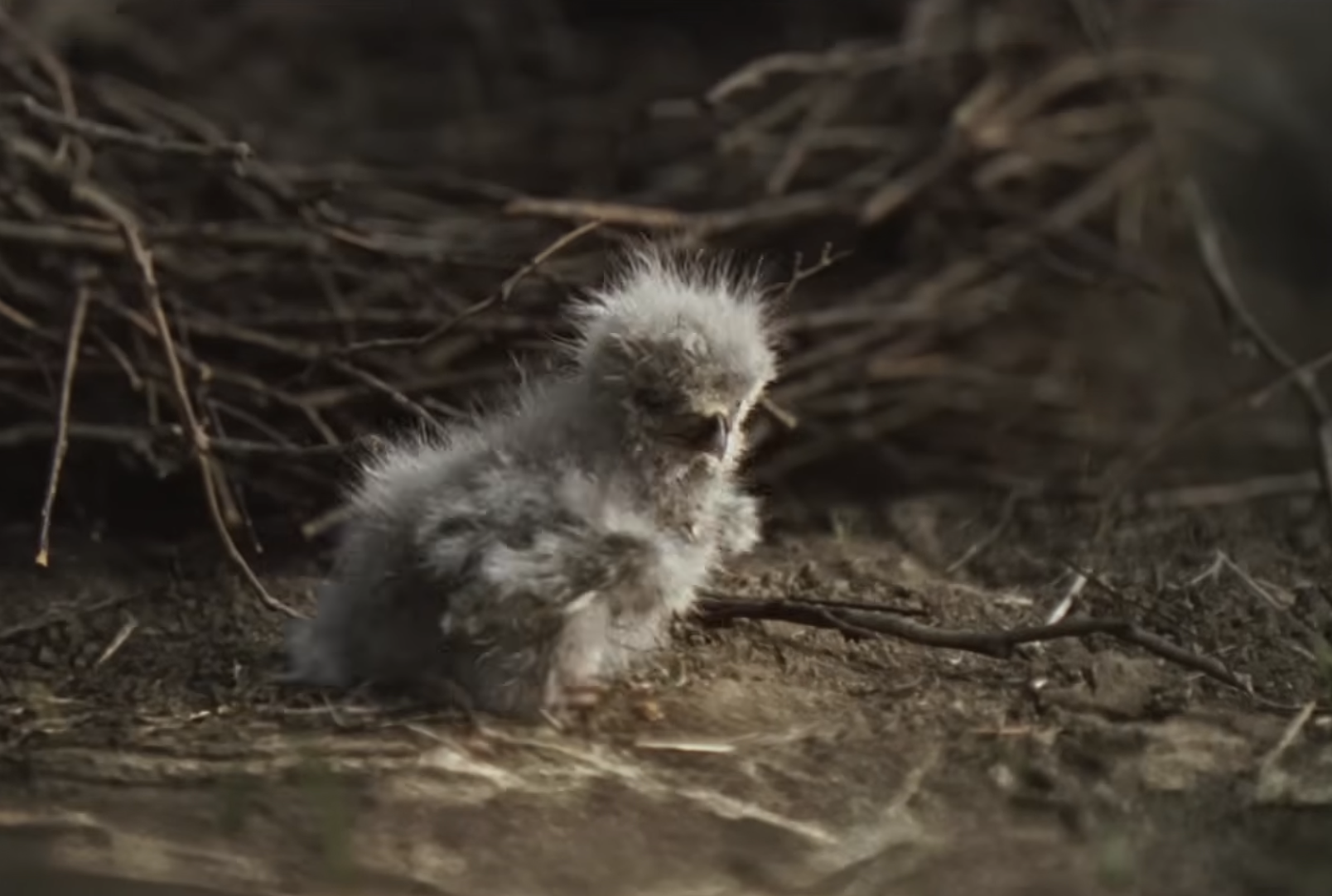
The foal steps closer to the fallen log where the eagle chick is struggling against the wind. Then — almost imperceptibly — it lowers its body.
Not kneeling.
Not dramatic.
Just dropping its frame a few inches.

Head dipping. Shoulders softening.
In equine behavior, that movement reduces intimidation. It’s how a larger animal signals calm toward something smaller or unfamiliar.
No trainer cue created that gesture.
But on camera, it reads instantly as protection.
Scale meeting vulnerability.
The eagle doesn’t flinch.
The horse doesn’t advance.
They simply exist at the same level for a second — storm moving around them.
That subtle posture shift changes everything emotionally.
Without it, the scene would be about proximity.
With it, the scene becomes about safety.

What viewers interpret as tenderness wasn’t designed through direction.
It was biology captured at the right moment.
And sometimes the smallest physical adjustment — a few inches of lowered height — is enough to turn two animals sharing space into a story people remember.