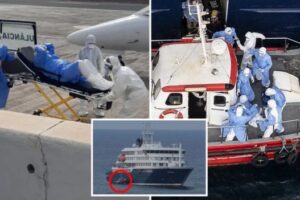
The deadly hantavirus outbreak aboard the stranded MV Hondius could reshape the way cruise lines screen passengers before boarding, according to an industry expert.
Three people have died, and eight others have fallen ill from a rare and extremely deadly strain of the virus, which investigators believe was brought on board by a Dutch couple who later succumbed to the disease.
The terrifying ordeal could have lasting implications — at least for cruises departing from Ushuaia, Argentina, where the MV Hondius set sail on March 20, veteran cruise journalist David Yeskel told The Post.

“For future cruises departing from Ushuaia, cruise lines may require passengers to complete a detailed travel history covering the previous 8 weeks as a precautionary measure, while also asking them to accurately and honestly self-report any symptoms experienced at the time of boarding,” Yeskel said.
Hantavirus is typically spread through rodent droppings, but one rare strain — the Andes virus — can spread between people and carries an alarming 40% mortality rate.
That strain is the likely culprit behind the Hondius outbreak, the World Health Organization said this week.
The virus, which typically requires prolonged, close contact in order to spread, manifests in flu-like symptoms that can quickly turn serious — and can lay dormant for up to eight weeks after initial infection.
Argentine investigators believe the Dutch passengers contracted the virus from rodents while visiting a landfill during a bird-watching tour in Ushuaia before boarding.
But there’s one big hole in the theory: neither the site nor the surrounding province of Tierra del Fuego had ever recorded a case of the hanavirus, authorities said.

Yeskel, who’s covered the cruise industry for over 25 years, has previously pushed similar precautionary measures during infectious disease threats onboard.
In 2014, a Carnival Magic cruise ship carrying 4,000 passengers sparked an Ebola scare after a Texas scientist onboard was found to have recently been in contact with a patient who died from the virus.
The woman reportedly tested negative and showed no symptoms, but was quarantined inside her cabin most of the voyage and denied permission to disembark in Belize.
“With the proper precautions taken via cruise line policies already in place and accurate self-reporting by passengers and crew, the risk is practically nil for an Ebola outbreak on a cruise vacation,” Yeskel told Travel Market Report at the time.

Like that incident, the self-described “Cruise Guru” described the Hondius outbreak as just a ripple.
“It shouldn’t have a lasting effect on bookings, since modern cruise ships adhere to hygiene standards that exceed those of land-based resorts,” Yeskel said, adding that cruise ships around the world are subject to strict safety and sanitation regulations, as well as regular inspections.
“They already employ — and adhere to — strict safety and hygiene procedures in order to minimize disease transmission aboard their ships.
“Potential cruise passengers and especially those who haven’t cruised don’t need to worry about cleanliness aboard ships or an incident like this reocurring,” he said.