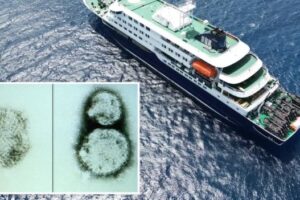
Two MV Hondius passengers who died from hantavirus likely contracted the deadly infection while bird-watching in Argentina, investigators believe – then brought it on board the now-stranded cruise ship.
Argentine officials say a Dutch couple that succumbed to the virus last month picked it up from rodents while visiting a landfill during a bird-watching tour in the city of Ushuaia in mid-March, they told the Associated Press Wednesday.
However, there’s one big hole in the theory. Authorities previously said that the area and the surrounding province of Tierra del Fuego had never recorded a case of the hantavirus.

The passengers then boarded the MV Hondius, which departed on its 35-day-long expedition trip from the Argentine port on March 20.
Hantavirus is usually transmitted by inhaling the virus from infected feces or urine from mice or rats.
The 70-year-old Dutchman reportedly began feeling sick on April 6, with a fever, headache, abdominal pain and diarrhea.
He developed acute respiratory distress and died on April 11, though his death wasn’t linked to the rare hantavirus until weeks later.

The man’s body remained onboard for the next two weeks, during which time his wife got sick.
On April 25, she flew with her husband’s body to South Africa, where she died in a Johannesburg hospital.
Eight other passengers and crew members became sick with the virus over the following almost two weeks – and by May 2, a third passenger died onboard the 353-foot Dutch vessel.

On Wednesday, three patients – a 56-year-old British national, a 41-year-old Dutch citizen and a 65-year-old German – believed to be infected with the virus were also evacuated from the ship, which remained anchored off Cape Verde.
The passengers, two of whom are believed to be seriously ill, were evacuated in order to receive medical care in the Netherlands, the World Health Organization said.
Eerie photos showed at least one of the patients wearing head-to-toe protective gear on a gurney as they were removed from an ambulance and escorted to a waiting jet at the port in Cape Verde’s capital city, Praia.

Among those evacuated was the ship’s doctor, who was once in “serious condition” but has improved, Spain’s health ministry said.
The passengers and crew members still left on the ship aren’t showing any symptoms of the virus, which is typically contracted from inhaling infected rodent droppings, according to officials.
The unnerving development Wednesday comes as the boat is now expected to port and disembark in Tenerife, according to the WHO and the ship’s operating company, Oceanwide Expeditions – though that possibility is reportedly the source of tense debate between Spanish authorities.

Fernando Clavijo, the incumbent president of the Canary Islands, told reporters Wednesday that his government has not received detailed information on how the process will be carried out – and raised fears that passengers could spread the hantavirus to citizens.
Reps for Spain’s central government have blasted his remarks as “irresponsible,” as health officials have said the risk of spreading hantavirus is very low, and given the fact there are 14 Spanish nationals on board, El Pais reported.